Look like a real business, not a Marketplace post: why your rental business needs its own website
Renters ask "is this legit?" A website on your own domain shows your machines and prices, and lets renters sign and start autopay online.
By DrumFleet · · 3 min read
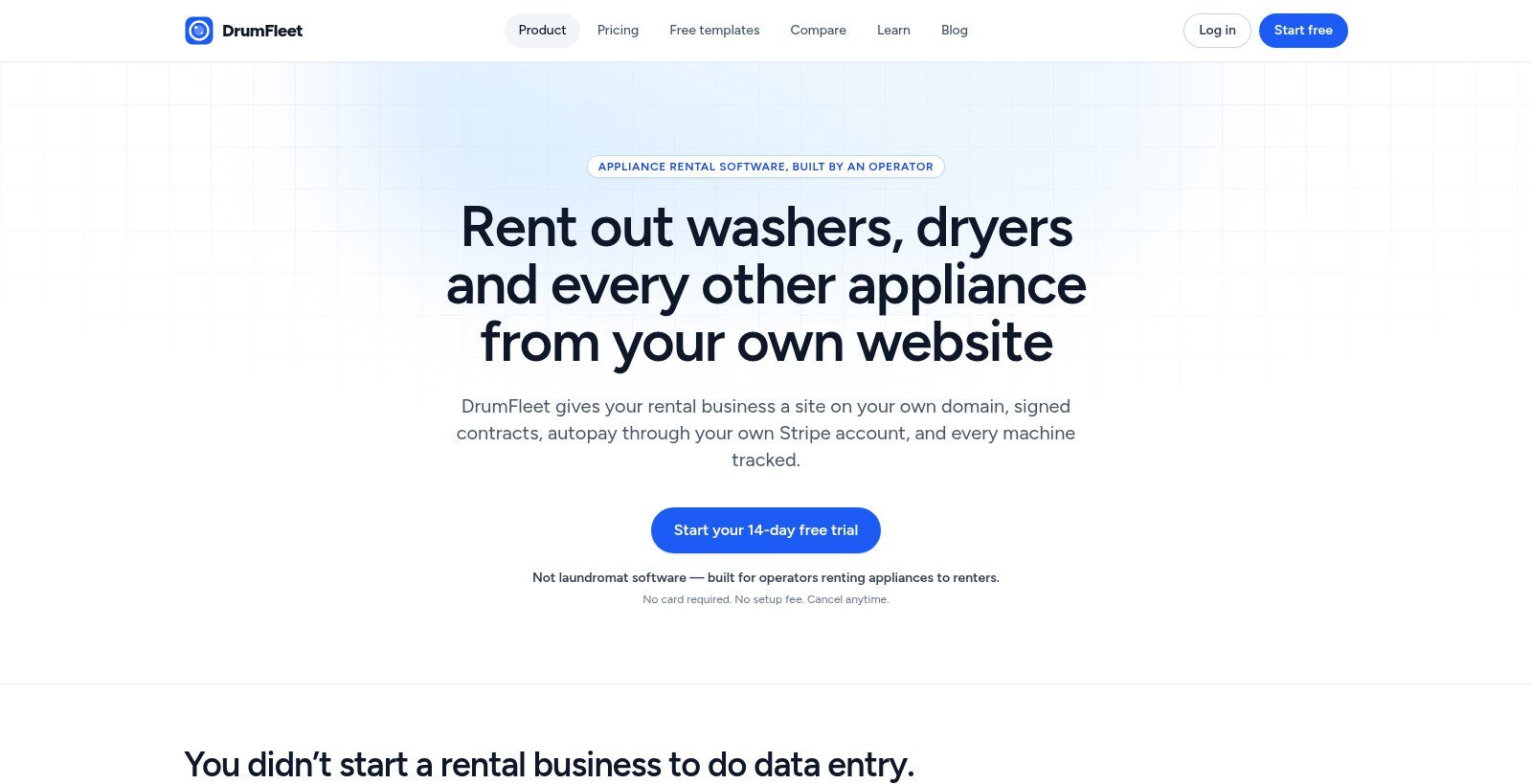
Sooner or later a renter asks it outright, or they think it and don't text back: "Is this legit?"
That's a fair question. They found you through a Marketplace post with a photo of a laundry closet and a monthly price. They're about to let a stranger into their home and put a card on file. A Facebook profile and a phone number is a thin answer.
What a Marketplace post can't do
Marketplace is a fine way to start conversations. It's a poor place to finish them:
- The post disappears when it slips down the feed
- There's nowhere to show every machine you rent, only the one in the photo
- Your prices, terms and service area live in a message thread you retype each time
- The renter has nothing to look up when they search your business name
Every one of those turns into texts. Enough texts and your evenings belong to people who haven't rented anything yet.
What your own site should do
Not much. A rental website doesn't need to be clever. It needs to answer the questions you're tired of typing:
- What you rent. Washers and dryers, and if you rent them, fridges, ranges and freezers, with photos of the actual machines.
- What it costs, per appliance type.
- Where you deliver.
- How to start: sign the rental agreement and set up autopay, online, before anyone loads the truck.
And it should live at your own domain, yourbusiness.com, not a page on someone else's site. When a renter searches your name, that's what should come up.
Why the domain matters
A link on someone else's domain still reads as borrowed. Your own domain is yours if you change software, reads like a business on a door hanger or a truck magnet, and gives search engines one place to point when someone looks you up.
It's a small thing that works quietly. Renters who see a real site, real machines and a real agreement ask fewer "is this legit?" questions.
Where the site fits with everything else
The site is the front door. Behind it is the rest of the rental: the e-signed agreement, autopay through your own Stripe account, and a record of which machine went to which renter, with photos. When those are connected, the renter who clicks your Marketplace link can go from "is this real?" to signed and on autopay without you typing the same paragraph again.
Getting one without becoming a web designer
You can build a site yourself and wire it to a form and Stripe. Plenty of people start there. Or you can use DrumFleet, where every plan includes your own rental website on your own domain, from Launch at $29 a month for up to 25 active rentals (pricing), every feature on every plan.
Start with what you have
Keep your Marketplace posts. Point them at a site you own. If you want to see what that looks like with your own machines, try DrumFleet free for 14 days, no card, or start with the door hanger template and give it a URL worth printing.